



compared to server and data center setup.

global workloads instead of months.

the first 100 applications.

were initially virtualized.

moved to AWS.
In 2019, Kärcher made the strategic decision to migrate its applications to the cloud. To facilitate the process, the company enlisted the help of Zoi, a full stack technology consultancy with extensive experience in cloud projects. Zoi's regionally-based team has been cloud native since 2012, making it a natural choice for Kärcher's cloud migration initiative. With its background knowledge in Manufacturing, Zoi was able to provide Kärcher with the necessary understanding of the challenges and processes associated with the industry, which made it easy for the two companies to continue their successful collaboration at such a large scale.
Even if the goal of cloud migration is always the same, there is no standard solution. We worked together with Kärcher to develop an individual custom migration roadmap with different scenarios depending on the application to be migrated.

Zoi started by assessing all Windows- and Linux-based applications using the AWS Migration Readiness Assessment. This included applications for manufacturing execution, software asset management, and warehouse control, as well as customer-facing applications, such as the company website and online store.
Of the 120 applications assessed, Zoi determined that almost 20 of them could be retired with the remainder migrated, representing 70 percent of Kärcher’s application landscape at the time. A full 95 percent of these were re-built, re-platformed, and right-sized for the cloud, with the project completed in 7 months. The company built most of its applications on Amazon Elastic Compute Cloud (Amazon EC2) Windows and Linux instances, giving it secure and resizable compute capacity for virtually any workload. For its main database system, the company links its applications to Amazon Relational Database Service (Amazon RDS), which allows it to set up, operate, and scale a relational database in the cloud with just a few clicks.
Kärcher containerized its customer-facing applications, running these on Amazon Elastic Kubernetes Service (Amazon EKS), the most trusted way to start, run, and scale Kubernetes. This helps the company to scale these applications and minimize downtime. To ensure that Kärcher’s IT team could manage the new processes required to manage the new cloud setup, Zoi provided training on all aspects of the new infrastructure from handling backups to setting up new environments.
Using AWS, Kärcher has saved 20 percent overall on its operational costs. It achieved this by being able to remove unused applications and by reducing the overall system size. In addition, instead of running all its applications on a 24/7 basis, the company now only pays for the cloud services it uses. For example, instead of continually running its stock management application, the company now uses it for just the required 7 days it needs annually.
Migrating apps to the cloud is just the beginning. Equally important are the validation, transition, and implementation steps. Firstly, security is extremely important for Zoi and Kärcher, therefore a comprehensive security assessment and functional validation were performed to ensure all necessary precautions were taken when migrating apps. Secondly, transitioning away from legacy systems requires significant change management. The last step in the process is implementing the cloud, which means a full launch of the new system.
Just managing systems’ licensing properly was time consuming – now that’s gone.
Zoi is also helping the company to manage its cloud costs on a monthly basis. Using AWS also triggers alarms so that the company can optimize its cloud infrastructure to see if unused items can be turned off.
Kärcher is also supporting its manufacturing processes using multiple AWS Regions in Australia, Europe, India, Japan, North America, and Singapore for lower latency connections to production sites. The company has also increased security and compliance using several AWS accounts spread over different worldwide regions, making its system less vulnerable to attack.
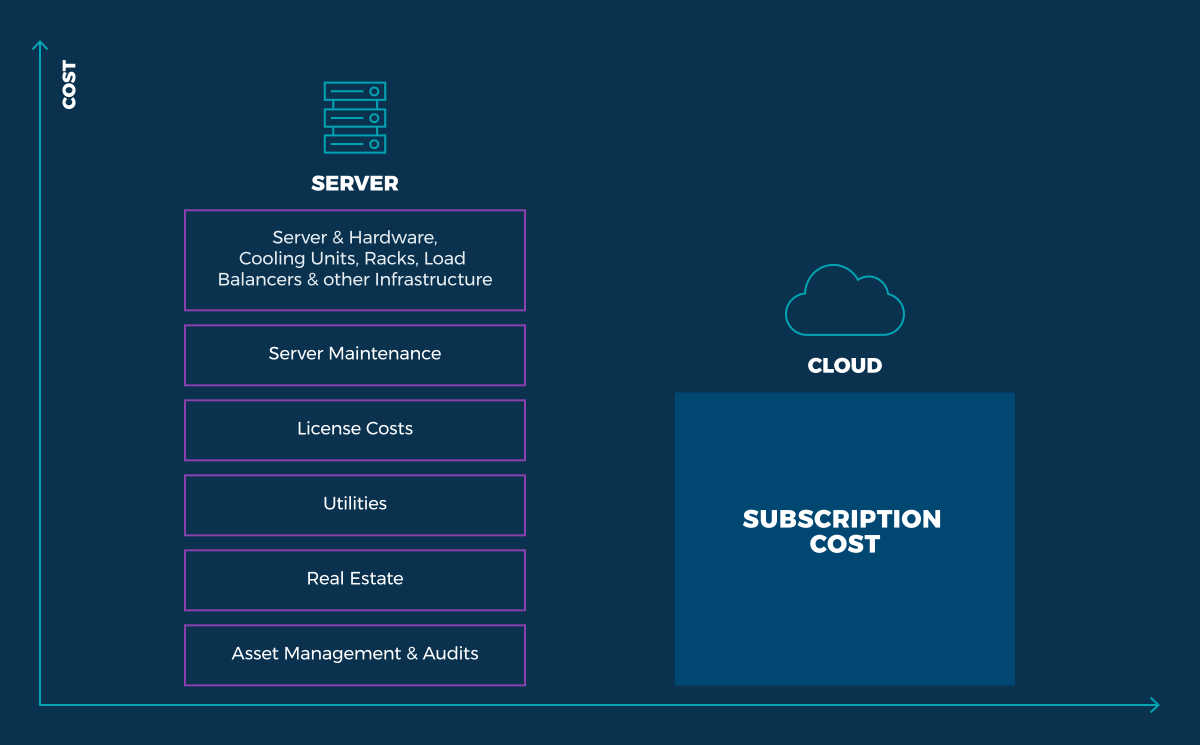
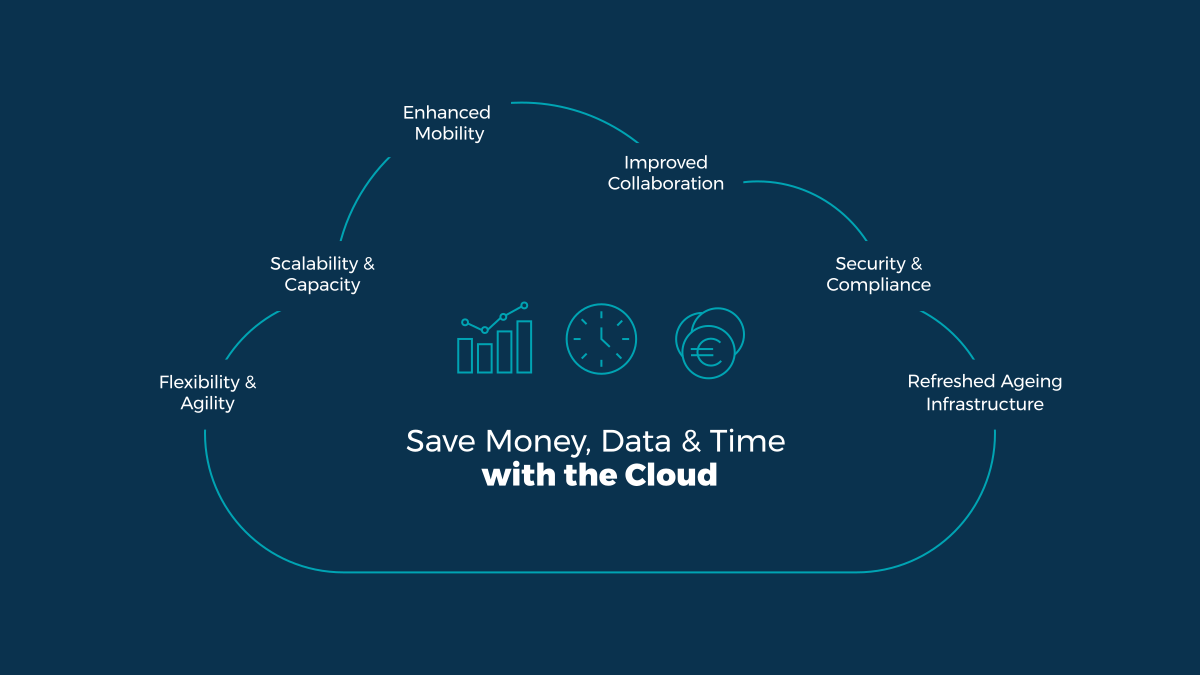
The cloud has promoted stability, flexibility, cost-efficiency, transparency, agility, and much more at Kärcher. The cloud provides a competitive advantage in a fast-paced world and is helping to drive digital transformation at Kärcher. There has never been a better time to move to the cloud.
Kärcher has already begun working with Zoi to migrate the SAP applications that it is still running in its outsourced data center. The full migration of the company’s entire application landscape is set to be completed in 2024.
With a more than solid cloud foundation, the next step for Kärcher was to migrate their ERP systems into the cloud.
The migration project took place over 9 waves and more than 20 SAP workloads were migrated over 12 months. In addition to SAP ERP systems, migrated workloads included BW/4HANA, Fiori, SCC, and ADS. As a result of the migration, 1.9 TB of data is now being hosted on AWS (EBS, S3, and EFS) including 270 EC2 instances.
Kärcher is no stranger to the cloud, but this migration represented a significant step forward for a company that started their cloud journey more than 10 years ago. Since then, they have never looked back.
This means the company is now all-in on AWS.
In a short timeframe, we’ve managed to migrate and modernize a lot of our IT landscape on AWS. The competency of Zoi in helping us manage our cloud transition frees us up to focus on one of Kärcher’s main driving principles, that of innovation.
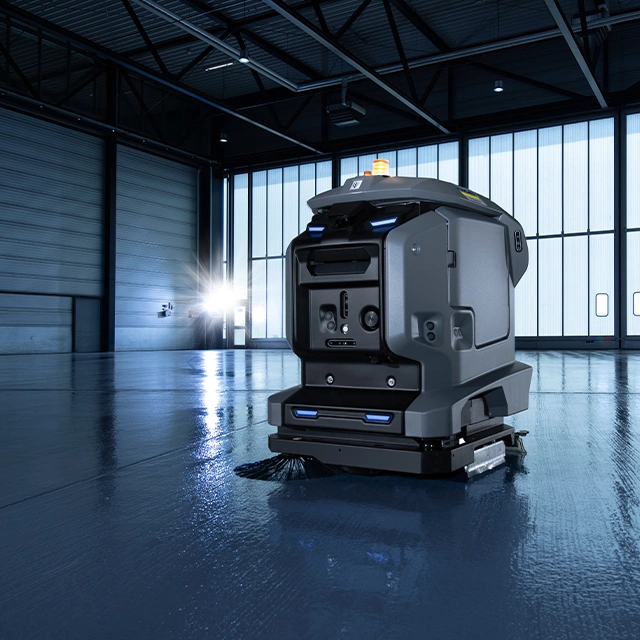
Alfred Kärcher SE & Co. KG, headquartered in Winnenden, Germany, provides sustainable cleaning and care products and services worldwide to professional users and households – and as customized digital solutions for individual customers. It is a family-owned global company with a presence in 80 countries.
From global collaboration to integrating complex workloads, explore our case studies to see how we help enterprises like yours succeed.